Posture: Why"Sit Up Straight" Doesn't Work Long-Term
Why doesn't sitting up straight fix your posture?
You've probably tried it. Pull your shoulders back. Lift your chest. Tuck your chin. It works — for a while. Then your attention moves somewhere else and your old posture returns.
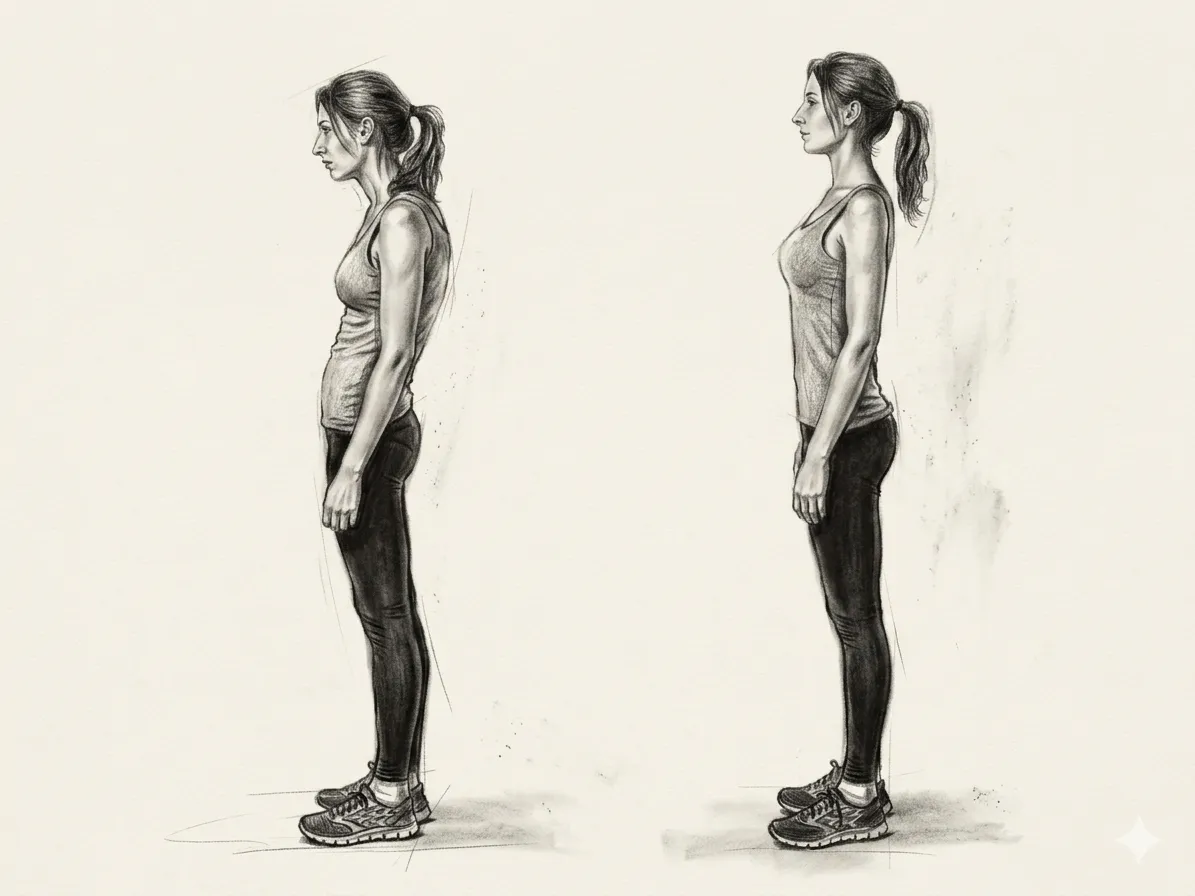
That's not necessarily a willpower problem. Posture isn't simply a position you hold. It is something your body continuously organises while you sit, stand and move. The goal isn't to spend your day correcting your posture. The goal is to make efficient posture easier for your body to organise automatically.Book Your Assessment · See all conditions treated
🚨 When a change in posture needs a doctor first
See your family physician for a rounding of the upper back that has developed quickly or is progressing, particularly after age fifty or with a history of osteoporosis; a new or increasing sideways curve in a child or adolescent; postural change with unexplained weight loss, fever or night pain; or any postural change accompanied by weakness, numbness, or loss of balance. These are uncommon. Most postural change is habitual and mechanical — but it's worth ruling the rest out first.
Posture isn't one perfect position
There isn't one posture that everyone should hold all day. You sit differently from how you stand. You stand differently from how you walk. You change your posture when you reach, lift, turn or become tired. Good postural control therefore isn't about finding one perfect position. It is about being able to adapt your posture to what you're doing.
Why willpower-based posture correction fades
When someone tells you to"sit up straight," you usually use muscles you can consciously control. You pull your shoulders back. You lift your chest. You tighten your back. It may look better from the outside. But you may simply be holding yourself in a different position. As soon as your attention moves elsewhere, your familiar posture returns. That is why constantly reminding yourself to"have better posture" can become tiring without producing lasting change.
Your posture is an output of your movement system
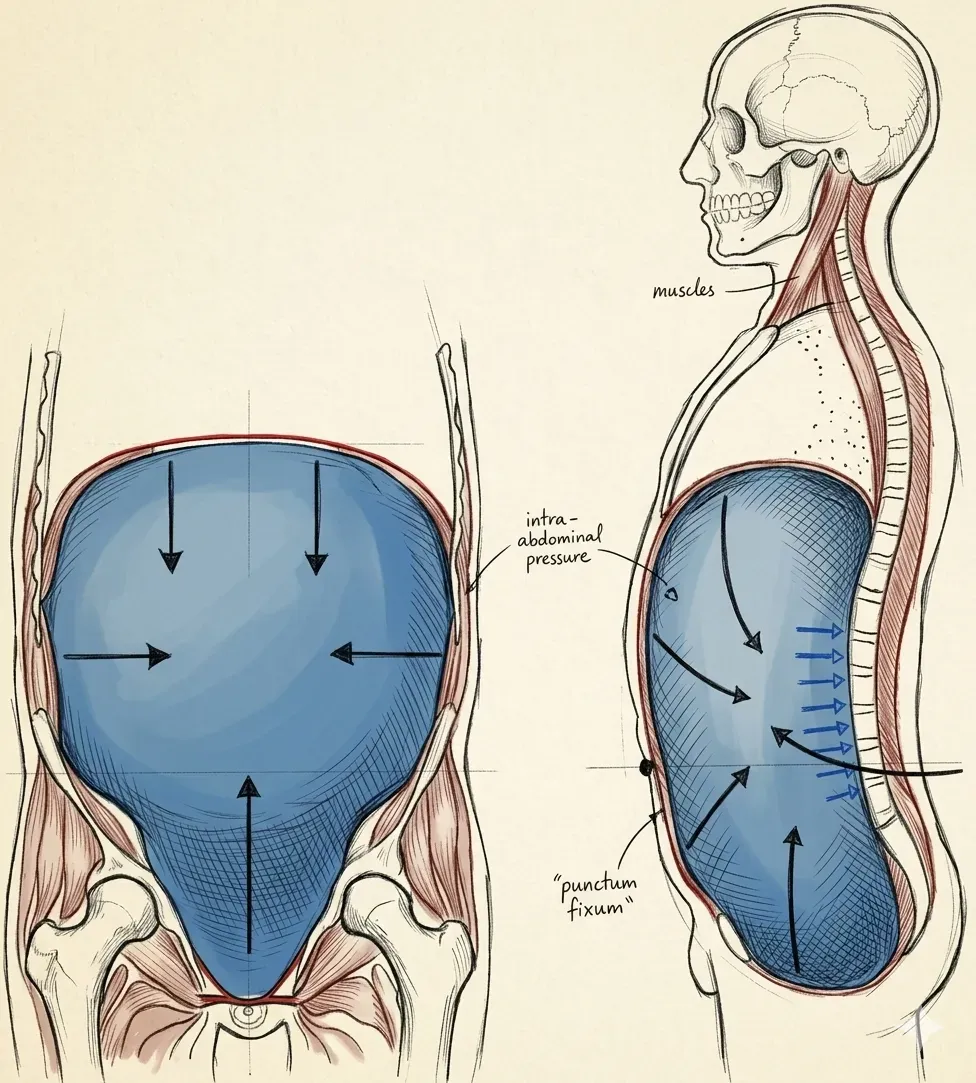
Your nervous system constantly organises how your body supports itself against gravity. It coordinates the spine, pelvis, shoulders, hips and limbs while you move. Muscle strength, joint mobility, balance, breathing, previous injury, habits and the demands placed on your body can all influence that organisation. Posture is therefore better understood as an output of the system, rather than a shape that needs to be imposed from the outside.
Why does my neck or shoulder always tighten?
If a muscle repeatedly has to work harder than necessary, it may become tense and uncomfortable. Stretching can make it feel better. But if the reason it is working so hard hasn't changed, the tension may return. The useful question is therefore not only: "Which muscle is tight?" It is also: "Why is this muscle working so hard?" Sometimes the answer is local. Sometimes it involves movement elsewhere in the body.
Sitting isn't automatically bad
Long periods in one position can be demanding. But sitting itself isn't necessarily the cause of your pain. There is no need to find a single"perfect" chair or a perfect sitting angle. For many people, the more useful strategy is movement variety. Change position. Get up. Walk. Move your spine and limbs. Give your body different demands throughout the day. A standing desk can be useful if it makes changing position easier. It isn't a cure for poor posture by itself.
What we assess
We don't judge your posture from one photograph or one position. Depending on your situation, we may look at:
- standing
- sitting
- walking
- bending
- reaching
- squatting
- single-leg control
- spinal and joint mobility
- muscle activity
- breathing
- how your posture changes when you move or become tired
The purpose is to understand why your body chooses the strategy it does.
Posture can change without you consciously holding it
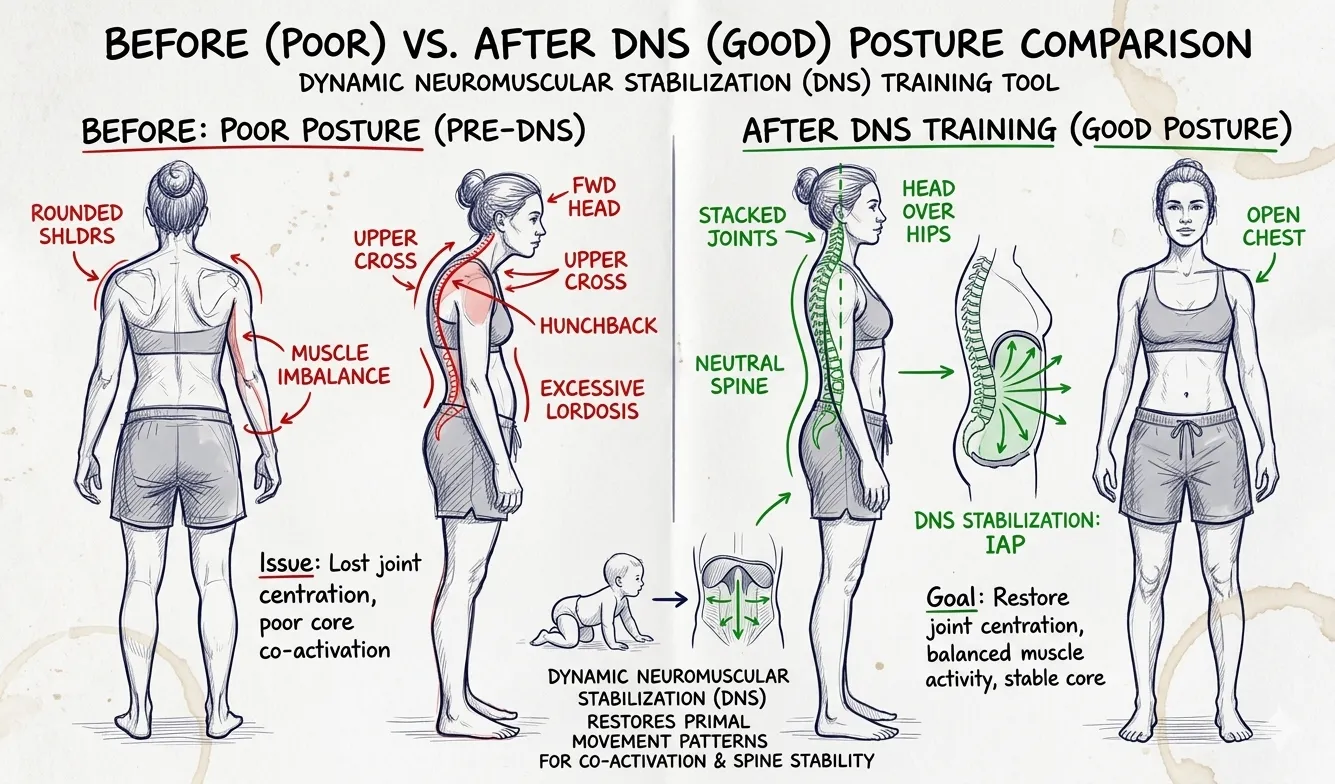
If your posture is influenced by how your body organises movement, changing posture isn't simply a matter of remembering to sit differently. The body may need to develop a different movement strategy. That can involve improving mobility, reducing excessive muscle activity, developing strength or practising coordinated movement. The particular combination depends on what the assessment finds.
Where DNS fits
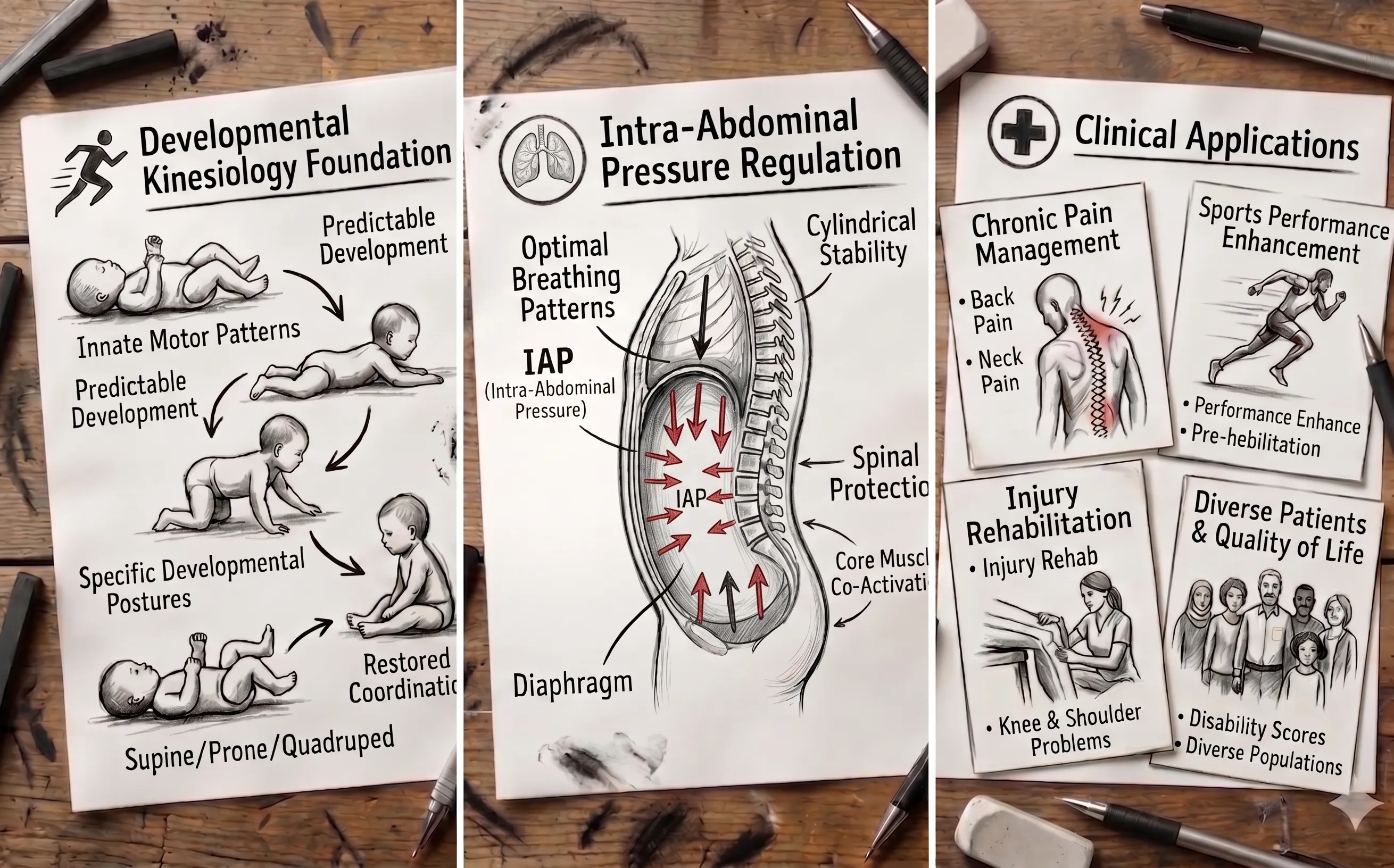
Dynamic Neuromuscular Stabilisation provides one framework for understanding and training postural control. It uses developmental movement patterns as a reference for how the nervous system learns to stabilise the body while allowing movement. The goal isn't to make you consciously hold a DNS posture. It is to help the body develop a more effective way of organising itself. What is DNS?
What improvement should feel like
The most useful change isn't necessarily that someone tells you that you"look straighter." You may instead notice:
- sitting feels easier
- standing requires less effort
- your neck or shoulders don't tighten as quickly
- you can stay in one position longer before needing to move
- movement feels more natural
- you don't have to keep reminding yourself how to sit or stand
The goal is not better posture that you have to hold. It is better postural control that becomes more automatic.
The Scandinavian Clinic
- Posture is assessed as an output, not corrected as a shape.
- We look at movement as well as static position.
- Joint restrictions and excessive muscle activity are addressed when relevant.
- Active movement training is used to develop better control.
- DNS can be incorporated where developmental movement patterns are relevant.
- Treatment is provided as Registered Massage Therapy and is covered by most extended health plans.
Frequently Asked Questions
Should I sit up straight?
Changing position is useful. Holding one rigid"perfect" posture all day isn't the goal.
Will a posture corrector fix my posture?
A brace can hold you in a position while you wear it. It doesn't necessarily change how your body organises posture when the brace is removed.
Will a standing desk fix my posture?
Not by itself. A standing desk can make it easier to change position, but standing all day is not necessarily better than sitting all day.
Is my posture causing my neck or back pain?
It may be one contributing factor, but it cannot be assumed. An assessment looks at whether the way you move is actually relevant to your symptoms.
Can I have good posture and still have pain?
Yes. Pain has many possible causes, and appearance alone doesn't tell us how efficiently your body is moving.
Do I need to think about my posture all day?
No. If you constantly have to remind yourself to hold a position, the strategy isn't truly automatic. The aim is to make good postural control require less conscious effort.
Schedule Your Visit
If you are tired of constantly correcting your posture, or if sitting and standing are associated with recurring neck, shoulder or back discomfort, an assessment can help determine whether movement and postural control are part of the problem.Book Your AssessmentSuite 202-101 West 16th Street, North Vancouver · (604) 926-4883
References
- Hodges PW, Richardson CA. Inefficient muscular stabilization of the lumbar spine associated with low back pain: a motor control evaluation of transversus abdominis. Spine. 1996;21(22):2640–2650.
- Kolář P, Šulc J, Kynčl M, et al. Postural function of the diaphragm in persons with and without chronic low back pain. JOSPT. 2012;42(4):352–362.
- Roffey DM, Wai EK, Bishop P, et al. Causal assessment of occupational sitting and low back pain: results of a systematic review. The Spine Journal. 2010;10(3):252–261.
Written by Eva Andersson, RMT · Last updated August 2026