Hip Pain Treatment in North Vancouver
Why does my hip hurt?
Hip pain can come from the joint itself, the tendons and muscles around it, or from the way the hip works together with the pelvis and lower back. The location and behaviour of the pain can provide useful clues.
Pain on the outside of the hip is different from deep groin pain. Pain that appears mainly after sitting is different from pain that began after an injury. And sometimes what feels like hip pain is partly coming from the lower back or surrounding structures.
At Scandinavian Clinic, Eva Andersson, RMT, conducts a thorough biomechanical assessment to tailor treatments directly to what the assessment reveals.
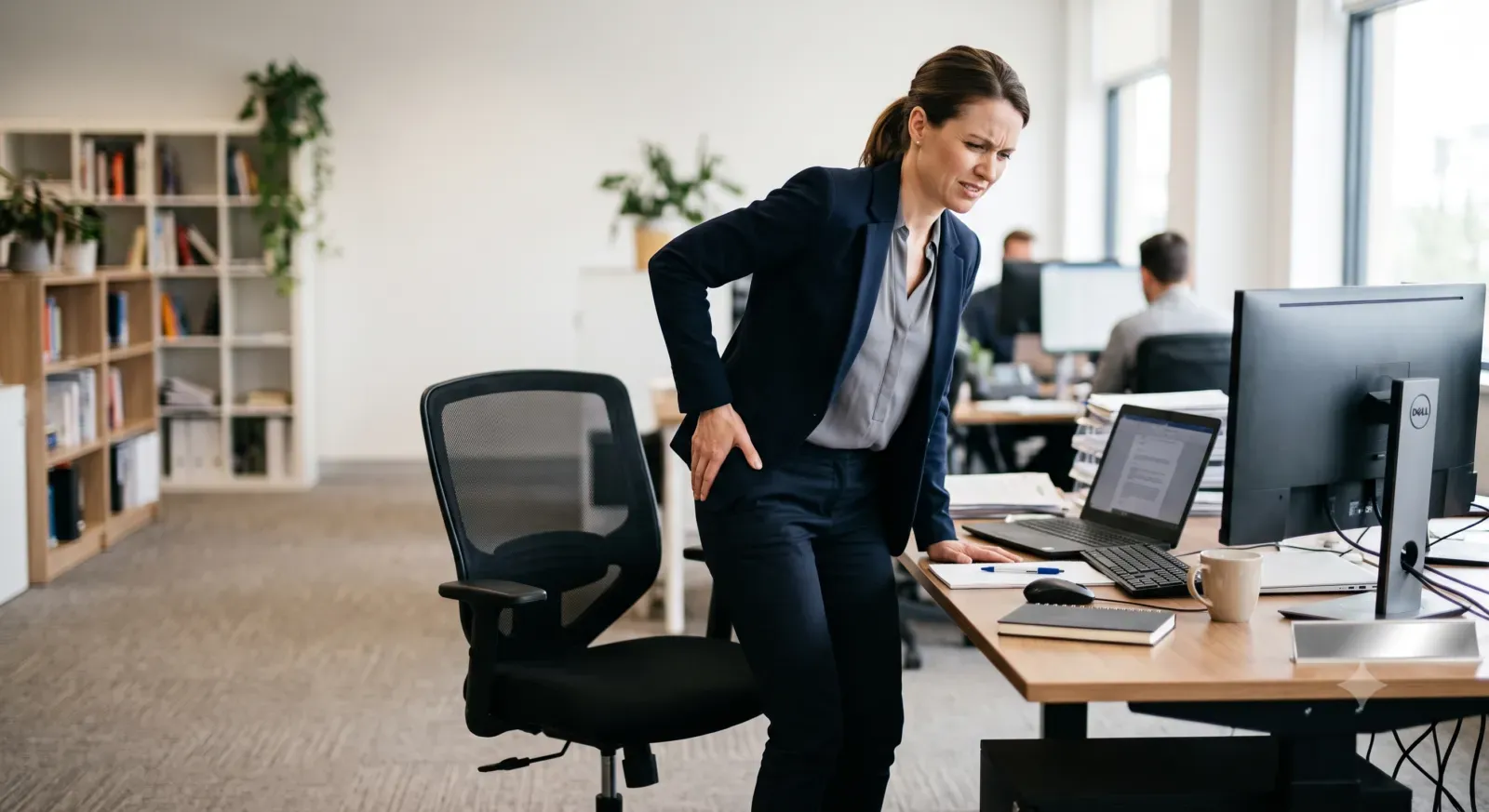
Hip pain can look very different
There isn't one type of hip pain. The location of your symptoms, what makes them worse, how they started and how your hip moves can all provide useful information. Four common examples illustrate why this matters.
Pain on the outside of the hip
Pain over the bony point on the outside of the hip is often described as bursitis. Today, this presentation is more commonly referred to as greater trochanteric pain syndrome and often involves the gluteal tendons. It may be worse when lying on that side, walking uphill, climbing stairs or after increased activity.
When a tendon, bursa, or surrounding tissue has become sensitive and painful, the solution is usually to find the underlying cause. Treatment depends on how irritable the area is and what demands are being placed on it. Massage or manual treatment usually help people with associated muscle tension or discomfort. Once pain is reduced, muscle strengthening can help rebuild tolerance where needed.
Deep groin pain and hip osteoarthritis
Pain felt deep in the groin, particularly when accompanied by stiffness and reduced hip movement, can sometimes be associated with osteoarthritis of the hip. Osteoarthritis can also be associated with pain in the knees, glute region, or in the lower back. Every case of groin pain is not arthritis, and the location of pain alone cannot establish the cause.
Where osteoarthritis is present, regular movement and appropriate exercises are important parts of management. The aim is to maintain as much comfortable movement, strength and functional capacity as possible.
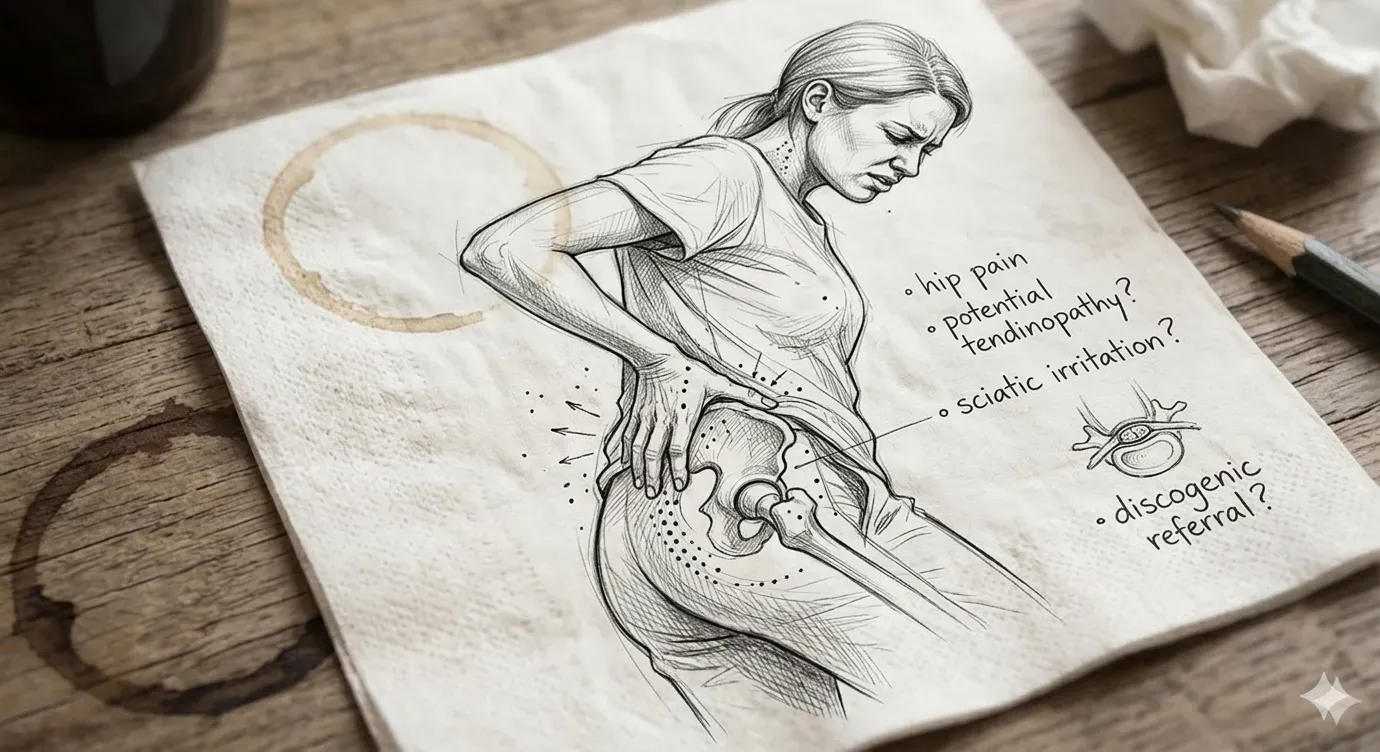
When the hip and lower back are involved together
The hip and lower back don't operate independently. The pelvis transfers load between the trunk and legs, and movement at one part of the system can influence what happens elsewhere. Someone may therefore feel pain primarily in the hip while also having restricted movement or altered load sharing around the pelvis or lower back.
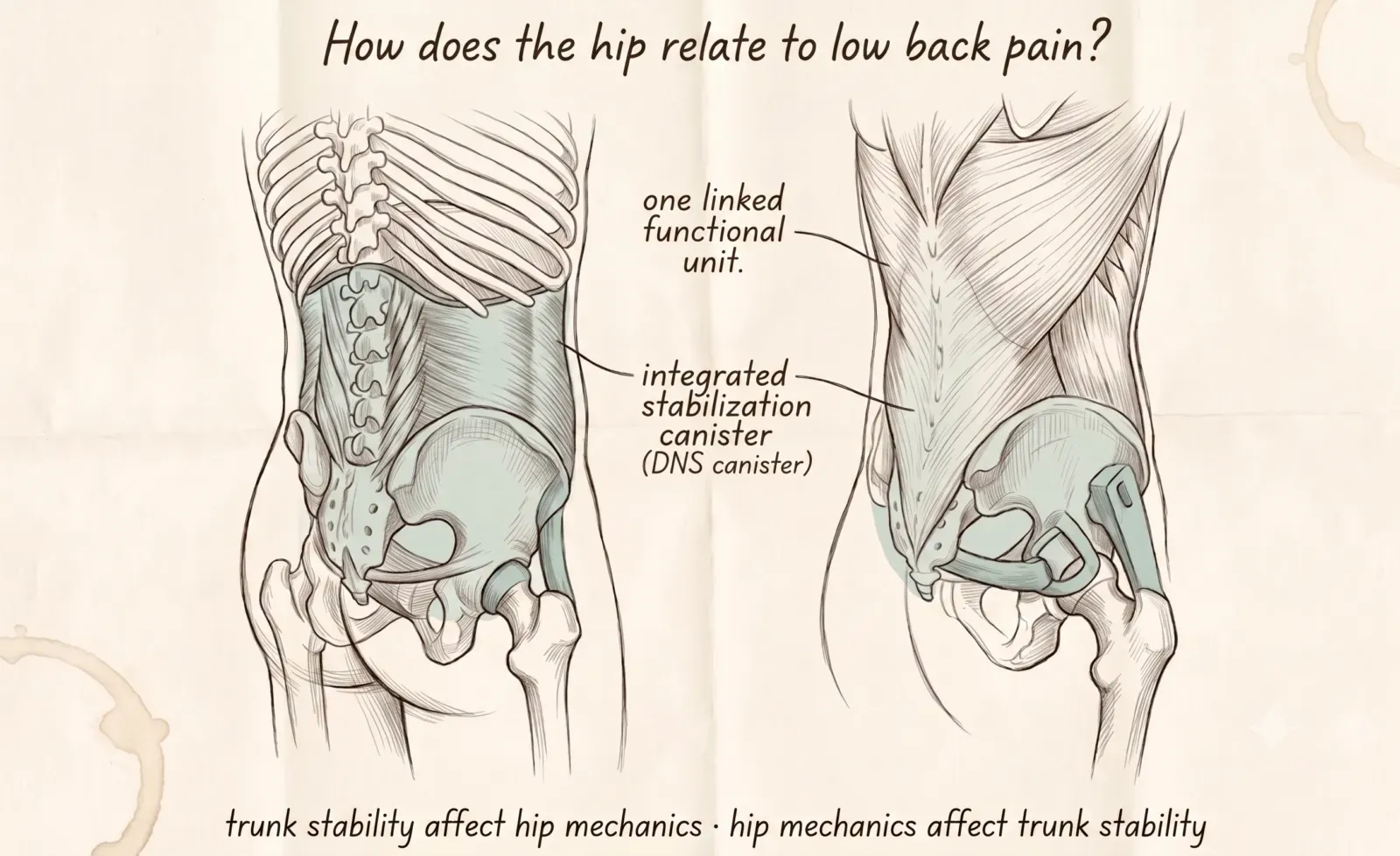
As an example, you might have symptoms in your glute region that is myofascial pain caused from muscles in the lower back. The assessment looks at the system rather than automatically deciding which structure is"the problem."
The hip is part of a movement system
A hip doesn't move by itself. Every step requires coordination between the foot, ankle, knee, hip, pelvis and trunk. The pelvis transfers forces between the legs and the spine, and the trunk provides a stable but adaptable base from which the legs can move.
This is one reason a hip assessment may include areas that don't hurt. It doesn't mean the painful hip is being ignored. It means we're looking at how the hip is functioning within the movement system.
What does the assessment look at?
During the assessment we look both at the pain and how it behaves as well as the range of motion.
- Hip mobility: Are there restrictions in the movement of the hip itself?
- Muscle activity: Are some muscles working excessively while others are not contributing effectively?
- Pelvic control: Can the pelvis remain controlled during movement?
- Lower back: Is the lower back compensating for restricted or poorly controlled hip movement?
- Movement under load: Does the way you move change when you squat, step, walk, balance or add resistance?
- Functional capacity: What can the hip tolerate in your actual life — walking, stairs, sitting, sport, lifting or other activities that matter to you?
What treatment may involve
There isn't one treatment that is right for every hip problem.
The approach depends on what the assessment finds and on your activities.
Massage and manual treatment
Massage can be useful for some types of hip pain.
It may help when muscles are tight, overloaded or contributing to discomfort.
Specific mobilization may also be used to improve restricted joint mobility, reduce muscle guarding or make movement more comfortable.
Often treatment is combined with exercise or other treatment to help restore movement and capacity.
Strengthening exercises
Commonly, weak muscles found in the area are strengthened through exercises.
Movement Retraining
If there are imbalances in movement patterns these are addressed by neuromuscular training.
What can help hip pain?
- massage
- manual treatment
- progressive strengthening
- restoring restricted mobility
- movement retraining
- balance and coordination
- gradually returning to normal activity
- DNS for selected patients where it is relevant and the patient wants to actively work on it
What to expect
Hip problems usually improve through an approach that matches the person's symptoms, needs and goals.
After the assessment, Eva will explain what she found, what she thinks is relevant to your symptoms and what treatment may be useful.
The goal is to help you get back to the activities that matter to you and, where appropriate, give you the tools to manage your hip yourself.
The Scandinavian Clinic
- A thorough bio-mechanical assessment first.
- Massage and manual treatment. These can be useful treatments in their own right for appropriate presentations, and may also be combined with exercise where useful.
- Swedish-trained orthopaedic manual therapy. Five years of university-level training in Sweden, with a strong emphasis on clinical reasoning and biomechanical assessment.
- Czech-trained in Dynamic Neuromuscular Stabilisation. DNS is available as an additional approach for selected patients where movement coordination appears relevant and who want to actively work on it.
- Covered by most extended health plans. As a Registered Massage Therapist, Eva's treatments are eligible for extended health benefits.
Frequently Asked Questions
Is hip pain always caused by the hip joint?
No. Hip pain can involve the joint, tendons, muscles or surrounding structures. Pain can also be referred from the lower back. That is why the location and behaviour of the symptoms are important during assessment.
Should I strengthen my glutes if my hip hurts?
Strengthening can be very useful, but the right exercise depends on what is causing the symptoms. If a tendon is irritated, for example, the amount and progression of loading matters.
Can hip pain come from my lower back?
Yes. The hip and lower back are mechanically connected, and pain can sometimes be referred from the lower back. It is also possible to have problems in both areas at the same time.
Does massage help hip pain?
Yes, it can. Massage and other manual treatments can be useful for some people, particularly when muscle tension, overload or restricted movement are contributing to their symptoms. It may provide meaningful pain relief and make movement easier. For some patients that may be the main treatment they need. For others, massage is combined with exercise or other treatment to help restore function and build capacity.
Schedule Your Visit
Book your appointment for hip pain treatment
If your hip pain developed gradually, followed an injury, occurs mainly with activity or sitting, or has not fully resolved with previous treatment, an assessment can help determine what is contributing to it.
Book Your AssessmentSuite 202-101 West 16th Street, North Vancouver · (604) 926-4883
References
- Fransen M, McConnell S, Hernandez-Molina G, Reichenbach S. Exercise for osteoarthritis of the hip. Cochrane Database of Systematic Reviews. 2014;(4):CD007912.
- Sampath KK, Mani R, Miyamori T, Tumilty S. The effects of manual therapy or exercise therapy or both in people with hip osteoarthritis: a systematic review and meta-analysis. Clinical Rehabilitation. 2016;30(12):1141–1155.
- Adding manual therapy to exercise for hip and knee osteoarthritis. Journal of Orthopaedic & Sports Physical Therapy. 2022.
- Frank C, Kobesová A, Kolář P. Dynamic neuromuscular stabilization & sports rehabilitation. International Journal of Sports Physical Therapy. 2013;8(1):62–73.
- Kobesová A, Kolář P. Developmental kinesiology: three levels of motor control in the assessment and treatment of the motor system. Journal of Bodywork and Movement Therapies. 2014;18(1):23–33.
- Page P, Frank C, Lardner R. Assessment and Treatment of Muscle Imbalance: The Janda Approach. Human Kinetics.
Written by Eva Andersson, RMT · Last updated August 2026